

I always feel I am onto something when related ideas come at me from different directions. Of late, this has been the case with dyslexia.
Every child or young adult who registers with Reading Force receives both a book and an RF scrapbook or teen journal. We match books to children’s reading ages and special educational needs, and in the process have found ourselves sending a lot of titles to children with dyslexia.
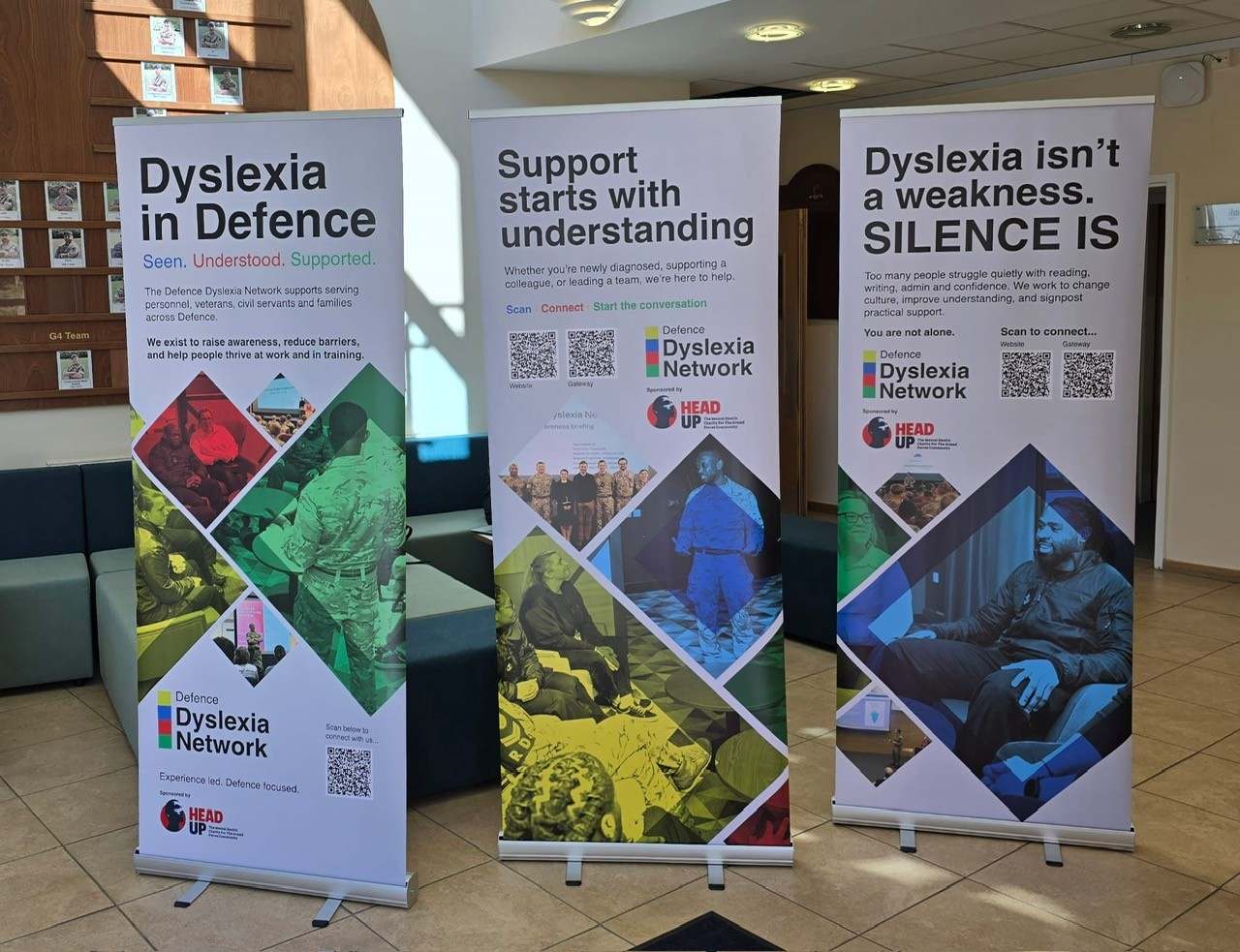
Parents and carers in the RF community are routinely surprised to find out that books to support those with dyslexia do exist. We are experts in what’s available and have longstanding relationships with relevant publishers. We are part of the SEN subgroup of the new Cobseo Children’s Cluster, and I was also asked to speak at the Defence Dyslexia Network, held in Pirbright in April 2026.
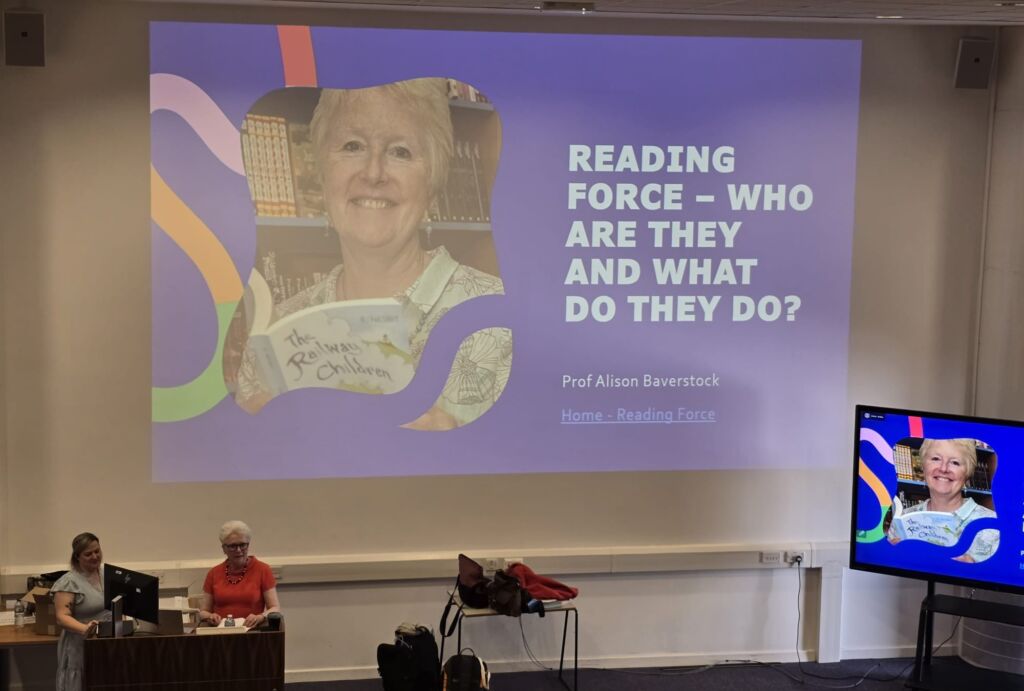
Preparing for this, I did some wider research, consulting our staff, trustees and patrons. What emerged was significant dyslexia experience within Reading Force – 70% of responders to my survey had a close awareness, either through self, or a family member. I am the parent of a young man with dyslexia myself.
Around the same time, a meeting was organised by the MOD to connect those working on research related to military children. We all outlined their areas of interest, and the special educational needs of military children were frequently mentioned. There has often been a tendency to assume these arise from disrupted education, given all the moving and school-changing that can take place.
But what if it’s actually dyslexia-related? Our board of patrons includes several award-winning authors. One of them, Meg Rosoff commented ‘I wonder if there’s a somewhat higher instance of people joining the military with dyslexia, given reliance on visual and spatial strengths as opposed to text. My friend who was the senior helicopter pilot in the Army said what he needed from trainee pilots was a sophisticated talent for 3-D visualisation which really cannot be taught.’ Another patron, author Sally Gardiner – herself dyslexic – commented on the range of aptitudes that correlate with being dyslexic, including empathy, problem-solving, intelligence, bravery, an ability to see the whole picture and anticipate what is coming next. All extremely useful in a military context.
We know that dyslexia runs in families. So maybe a high level of SEN within military children is due to a heritable tendency for dyslexia, as each year a new generation of problem-solving and creative young people reaches school age. I consulted Verity Brambley of the MOD, who also spoke at the conference on her experience as a dyslexic. She commented: ‘Like you, I suspect that neurodivergence is significantly over-represented within the Armed Forces, and consequently with Services children.’
If this is true, then there are implications for both the effective support for these young people, and the future allocation of resources. Amanda Rowley, former headteacher of Wavell School in Farnborough, and a Reading Force trustee commented: ‘I applied to Hampshire County Council and succeeded in setting up a Resource Provision for SpLD (Specific Learning Difficulties) which includes dyslexia. We were the specialist school in the north of the county for dyslexia. We found that by teaching SpLD-friendly methods to all children, all children thrived as many children are on the fringes of dyslexia and never get diagnosed.’
This good practice could be more widely known and shared, and the implications absorbed. Is this a notable research gap? How many individuals with dyslexia are within the UK military, and could it be that the very skills that correlate with dyslexia are an under-appreciated asset?
Alison Baverstock